I don't know... 1.2% of GDP just doesn't seem that extreme to me. Certainly nowhere near "eating the economy" level compared to other transformative technologies or programs like:
Yeah that's my first reaction to. 1.2% doesn't sound much. It's just people making headlines out of thin air. If it lists the water and energy consumption I might be more concerned.
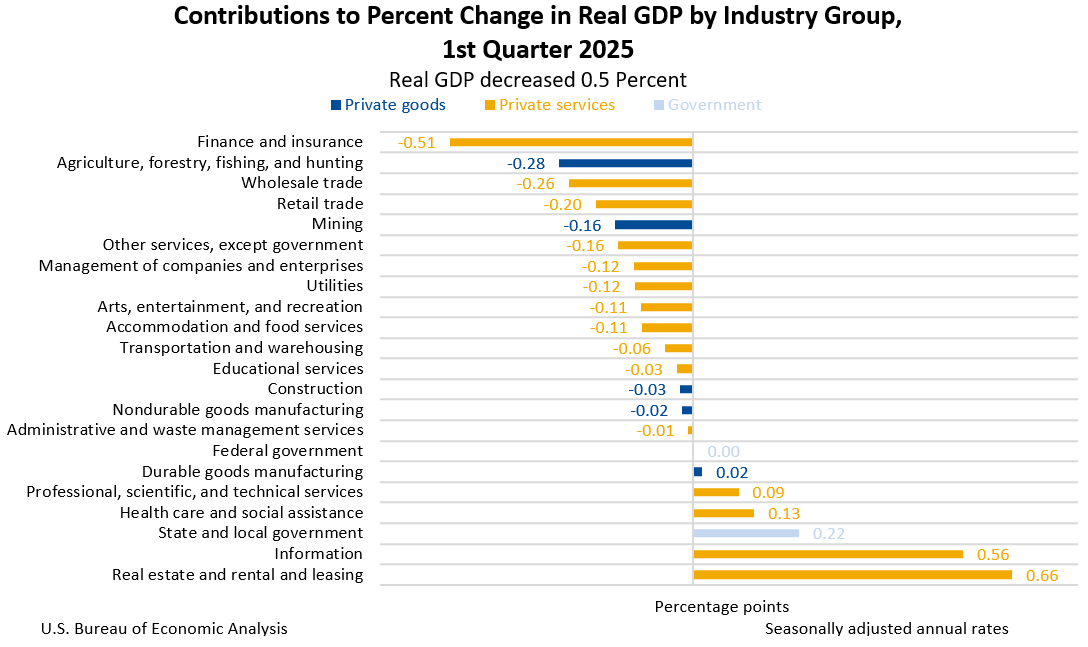
Slightly off-topic, but ~9% of GDP is generated by "financial services" in the US. Personally I think it's a more alarming data point.
I have read, but not verified the figures myself that if the United States had Australia's healthcare system - universal, government funded healthcare (excluding dental) then all US citizens would have near free healthcare, would not need costly insurance, and the government would spend a similar amount to what it does now
According to O3 US public health spending (state + federal) is 8.6% of gdp. For perspective, here's a list of countries with universal systems which spend less (these numbers include private spending), and life expectancy (US is 78.4 for reference):
So it seems like we could have universal coverage and higher life expectancy if the US government simply spent exactly what it is currently spending, but on everyone, rather than just the old, poor, and veterans.
There is a factor for the US effectively subsidizing these countries by having our current system. Healthcare companies make their bread in the US and get scraps elsewhere in the world.
This drives an enormous amount of innovation, and the near complete dominance of US healthcare companies in the west reflects that.
The US moving to a universal healthcare model would likely kill the lucrative US market, and while providing cheaper healthcare, it likely wouldn't make them dramatically cheaper while also having the effect of driving up costs in other western countries.
A bit like a balloon, where the profits are swelled in the US and limp elsewhere, squeezing the US will ha global effects.
Anyone that lives in a country with universal healthcare only knows it's a no-brainer because they have the American nightmare of a health care system to compare it to. Seriously, I don't know how/why Americans put up with the stress of one serious medical event potentially financially ruining your life.
Ultimately, "financial services" is what's downstream of insurance, banking (deposits / money transfers), loans and retirement savings. Also efficient capital allocation and the provision of government services to some extend. Those are things we want, and we want those things to work well.
Why is 9% for financial services bad? This should cover fees/interest from everything like loans, transactions, mortgages, advice, investing, etc. It doesn't seem that surprising to me that the systems that are the backbone for all the money operations that power the rest of the economy make up about 10%.
I get your point, but the flip side is that private companies like visa and Mastercard get to skip 2.5%+ off the entire economy. Visa has more than 50% profit margin, and it’s not like these companies are innovating with all that extra cash either. It’s just money from my pocket to some rich investor somewhere
Visa and Mastercard aren’t skimming 2.5% off the economy; the majority of the interchange fees go to banks (which Visa is not; their actual product is VisaNet which provides payment infrastructure, broadly.)
Trivially verifiable by Visa’s revenue being $35B, which is not even close to 1% of just US GDP (about $30T).
Cash costs more nearly that much when you count all the time spent counting and recounting it - at least 8 times for every transaction. (the buyer finds and counts, then the cashier counts, then count change. Then the manager counts and recounts the till, finally the bank counts and recounts it - several of the above will come up with a miscount and recount additional times to verify). Then we add crime loss on top of that.
Or your retirement account. Everyone is mad about investors and companies making money. Sure, there are ultra wealthy people (mostly founders) that benefit disproportionately. However, most people who hope to retire some day rely on a 401k, pension, etc which is dependent on stocks. Retirement accounts have about $36T in the US, mostly in equities and corporate bonds.
"Founders" are a tiny percentage of the rich, they're just the ones in the news.
The richest 1% own half the wealth in the world and the gap is getting wider. Since 2020, for every dollar of new global wealth gained by someone in the bottom 90%, one of the world’s billionaires has gained $1.7 million. (Source: https://www.globalcitizen.org/en/content/wealth-inequality-o...)
So yes, some of the wealth is going to your retirement account. But for every penny going to a middle-class professional workers retirement, there's about a thousand dollars going to some hedge fund manager or the trust fund of the grandson of some robber baron who got rich a hundred years ago.
Interests you pay is not necessarily all financial services revenue. Only the net interests the industry receives count as revenue. There's a lot of netting going on in finance.
"Inefficient" implies the money is being burned or something. It's flowing into the pockets of people who work in the financial services industry, who then spend it on other things. The economy isn't zero-sum.
And the industry itself greases the wheels of other industries. In other words without financial services like lending and payment processing there would be less spending and investment overall, so other industries would shrink along with it.
You’re falling for the broken window fallacy, it’s inefficient as demonstrated by automation reducing the percentage of the economy devoted to financial services without any negative effects.
Banking used to really suck. Walk into an old bank building and it looks empty with spaces for a dozen tellers never actually used, this is a good thing as nobody actually wants to stand in line at a bank. People have largely stopped using cash because swiping a card is just more pleasant.
Meanwhile payment networks (Visa, Mastercard) have over a 50% profit margin, that’s a huge loss for the US economy. Financial services dropping to 1% of the overall economy would represent a vast improvement over the current system.
Retail Banking =/= Finance. You cannot easily standardize let alone automate a corporate merger or raise capital from various sources due to unique individual characteristics of each company, that's why investment banks exist.
The Retail Bank's main function isn't providing cash either, it's keeping deposits which they loan out for profits. Whether you use cards or cash won't affect those margins.
While LLM’s are nowhere near this capacity today, it’s likely future AI systems will be able to handle such complexities just fine. Competition + automation means the financial sector really is on a long term decline. Some things aren’t automated due to customer preference, but preferences change over time.
> The Retail Bank's main function isn't providing cash either, it's keeping deposits which they loan out for profits. Whether you use cards or cash won't affect those margins.
The margins on loans have decreased significantly as shown by much lower effective interest rates relative to inflation.
The effort associated with loans have been reduced significantly as credit checks, automated repayment, etc have reduced the risks and overhead. Competition between banks means their profits are a function of costs, thus driving down costs has reduced in the overhead on loans.
Is there any evidence that central planning on a much larger scale is drastically more efficient? We're talking about a whole country, after all. I take your point that companies themselves are usually centrally planned internally, but centrally planned economies haven't fared so well.
> Is there any evidence that central planning on a much larger scale is drastically more efficient?
If it were, why do we have more than one company?
> I take your point that companies themselves are usually centrally planned internally
Well, sort of. It is true that companies exist solely for the reason of exploiting efficiencies in central planning. If central planning was always inefficient, companies wouldn't exist! But, as I alluded to earlier, no company has found central planning to be efficient in all cases. Not even the largest company in the world centrally plans everything. Not even close.
As with most things in life, a bit of balance will serve you well.
Large companies are all decentralized. The ceo will set broad direction but they always leave details to the lower levels. Those lower levels often do things that are against the needs of a different division. Companies are reorganizing for efficiency all the time.
> Large companies are all decentralized. The ceo will set broad direction but they always leave details to the lower levels.
Typically, central planning does not imply micromanagement. The "broad direction" you speak of is the central planning.
> Companies are reorganizing for efficiency all the time.
But, of course, companies wouldn't exist if markets were perfectly efficient. The sole reason for companies is to exploit the efficiencies of central planning. But, of course, just as if markets were perfectly efficient there would be no companies, if central planning was perfectly efficient there would only be one company, so... Like always, there are tradeoffs that we have to find balance in.
I can't help but wonder if there's a middle ground between people not being able to obtain credit to pursue new enterprises, and entire productive enterprises being swallowed up in the pursuit of short-term rent seeking.
Could such a middle ground exist? Sure. Could someone design a system where that middle ground was a natural equilibrium? Unsure. I don't see how you incentivise the goldilocks behaviour (but I am not the smartest bear so maybe someone else can)
There's a good book on this topic by a Scottish philosopher: An Inquiry into the Nature and Cauſes of the Wealth of Nations by Adam Smith, LL. D. and F. R. S, formerly Profeſſor of Moral Philoſophy in the Univerſity of Glasgow.
The economy is not a fixed pie that you can just take slices from one sector and give them to another. Financial services provide liquidity that supports every other sector; getting rid of them would cause contraction in every other sector.
That's true to a degree. But giving them free reign inventivizes the kind of behavior that gave us the 2008 financial crisis. So the commenter can be forgiven for wanting to limit that sector.
I'm banking on Space Emperor Elon. If he can form a Musk Sphere around Mars, he should be able to generate enough energy to push Deimos into Earth reasonably fast. Of course, he doesn't have to actually do it. Instead, he could extract tribute and demand we push 50M people into a volcano each year in exchange for not extincting us. In just a few decades, most all our issues resolve.
some years back I was talking to an acquaintance through my daughter's kindergarten and complaining about this point and he said it was because financial services was where all the innovation was happening (he was an investment consultant of some sort)
You’re right that it’s large in an absolute sense, but any sector of the US economy is going to be large in an absolute sense. It’s not a very meaningful statement. Using percentages allows comparison to other items, which for some purposes gives a more useful sense of size. For instance, based on your numbers, AI expenditure is about 1/3 the total military expenditure. I tend to agree that this is less than I expected, and generally makes me feel a bit better about the (imo excessive) hype.
It's small as a part of the economy. It's huge as a completely new thing. The US economy in total has been growing something like an average of 2.5% over recent years. Something that is all-the-growth-of-the-last-year-in-one-place is pretty significant.
AI didn’t happen in one year. Netflix’s famous recommender system challenge kicked off in _2006_! And “Big Data” was all the rage ten years ago. The category “AI” includes these things.
The entire population of Norway fits in Queens and Brooklyn. If everyone there decided to whittle spoons we'd be midly concerned about just what got in their water, but it won't be an existential crisis for the rest of us.
I will never understand people who use tiny European countries as meaningful comparisons to continent sized ones.
It helps people understand scale, since there is only one other kinda similar economic machine, and it's China. The EU is too loosely coordinated to really compare.
The population of Queens and Brooklyn is one of the most densely populated areas on the planet. I will never understand people who use massively outlier-sized cities as meaningful comparisons to nations.
Queens and Brooklyn are not outliers on the global scale. Most Asian countries has similar population densities if not higher. It's really the small cities in Europe that are the outliers here.
You're looking at dots on a graph when you should be looking at lines and curves (and slopes of curves). The author makes this argument:
* Movement of capital from other fields to "AI".
* Duration of asset value (eg, AI in months/years vs railroad in decades/centuries).
* "Without AI datacenter investment, Q1 GDP contraction could have been closer to –2.1%".
To state a bit more simply: the rate at which this spending has gone from about 0% to 1.2% is extremely fast which is point the author is trying to make.
The Q1 GDP comment is stunning because what it says is that if the same Q1 had happened just two years ago there’s a very good chance we’d be looking at a modestly sized recession. Now of course things aren’t zero-sum and it’s impossible to really make a useful claim like that but it’s still striking.
It's hard for me to tell what is a bigger misspending of money - LLMs or Apollo... At least I have a direct access to LLMs. Not sure I would need a direct access to moon rocks though.
It seems quite plausible that if we hadn't done the Apollo program that we'd probably be about 10 to 20 years behind in semiconductors right now (not to mention other technologies).
When you say "we" I assume you are from Taiwan? Good for you people, but it isn't much of a win for US industrial policy when it pushes Taiwan to the ascendant position and seems to be locking in Asian dominance of tech manufacturing.
No, "we" as in humanity. Apollo funding gave the development of integrated circuits a boost. Sure, we would've developed integrated circuits eventually anyway but it would've taken longer to get there.
The crux of the article is asking whether such a large investment is justified; downplaying the article saying it's only X% of the GDP compared to Y doesn't address the issue.
More than a decade long. The technology and industry here was broadly shared. They did things like highjacked bra manufacturers to make space suits.
> Railroads: 6% (mentioned by the author)
We're still using this investment today.
> Covid stimulus: 27%
The virus that was killing us the fizzled is probably not the best example... Only arguments will ensue if I even attempt to point thing out in this one.
> WW2 defense: 40%
I mean Russia made its last lend lease payment in 2006. It lead to America dominance of the globe. It looks like an investment that paid it self off.
How much of the hardware spend on AI is going to be usable in 5years?
There are some deep fundamental questions one should be asking if they pay attention to the hardware space. Who is going to solve the power density problem? Does their solution mean we're moving to exotic cooling (hint: yes)? Have we hit another Moores law style wall (IPC is flat and we dont have a lot of growth left in clock, back to that pesky power and cooling problem). If a lot of it is usable in 5 years thats great, but then the industry isnt going to get any help from the hardware side and thats a bad omen for "scaling".
Meanwhile capex does not include power, data, constables or people. It may include training, but we know that can't be amortized. (how long does a trained system last before you need another, or before you need a continuation/update).
Everyone is going after AI under the assumption that they can market capture, or build some sort of moat, or... The problem is that no one has come up with the killer app where the tech will pay for itself. And many in the industry are smart enough not to try to build their product on someone else's platform (cause rug pulls are a thing).
"AI" could go the way of 3d tv's, VR, metaverse, where the hype never meets up with hope. That doesn't mean we wont get a bunch of great tooling out of it. It is going to need less academics and more engineering (and for that hardware costs have to drop...)
Given the ratio of software to hardware I think it's pretty significant. Apollo put 12 people on the moon, once. AI is used by hundreds of millions every day.
- The birth of the space age, and more realistically the birth of the ICBM and satellite age. Both key to national security, and in the context of a cold war.
- 40% of long-distance ton miles travel by rail in the US. This represents a VAST part of the economic activity within the country.
- A literal plague, and the cessation of much economic activity, with the goal of avoiding a total collapse.
- ...Come on.
So we're comparing these earth-shaking changes and reactions to crisis with "AI"? Other than the people selling pickaxes and hookers to the prospectors, who is getting rich here exactly? What essential economic activity is AI crucial to? What war is it fighting? It mostly seems to be a toy that costs FAR more than it could ever hope to make, subsidized by some obscenely wealthy speculators, executives fantasizing about savings that don't materialize, and a product looking for a purpose commensurate to the resources it eats.
It continually surprises me when people are in denial like this.
Literally every profession around me is radically changing due to AI. Legal, tech, marketing etc have adopted AI faster than any technology I have ever witnessed.
Interestingly I just talked to several lawyers who were annoyed at how many mistakes were being made and how much time was being wasted due to use of LLMs. I suppose that still qualifies as radically changing — you didn’t specify for the better.
One of the problems I have with AI is that industry adoption is 95% about reducing costs, not improving quality.
I refuse to believe this will not have long term consequences.
I WISH that after this, companies will put up quality guardrails to basically offer the same product 60% cheaper at better quality, but I don't trust companies.
The adoption rate seems driven by a race to bottom, a desire to control "the next big thing" before someone else does, executive reflex, and some real use cases.
But then we saw the same thing with Crypto, tons of money poured into that, the Metaverse was going to be the next big thing! People who didn't see and accept that must not understand the obvious appeal...
Within 10 minutes earlier today, I took 1.5 years of raw financial trading data and generated performance stats, graphed out return distributions, ran correlation analysis, and to top it off created monte-carlo shock tests using the base data as an input for the model and ran hundreds of simulations with corresponding charts.
Each of the 15 charts would have been a page of boilerplate + Python, and frankly there was a huge amount of interdisciplinary work that went into the hundreds of thought steps in the deep reasoning model. It would have taken days to fill in the gaps and finish the analysis. The new crop of deep reasoning models that can do iteration is powerful.
The gap between previous "scratch work" of poking around a spreadsheet, and getting pages of advanced data analytics tabula rasa, is a gap so large I almost don't have words for it. It often seems larger than the gap between pen and paper and a computer.
And then later, off of work, I wanted to show real average post-inflation returns for housing areas that gentrify and compare it with non-gentrifying areas. Within a minute all of the hard data was pulled in and summed up. It then codes up a graph for the typical "shape of gentrification", which I didn't even need to clarify to get a good answer. Again, this is as large a jump as moving from an encyclopedia to an internet search engine.
I know it's used all over finance though. At Jane Street (upper echelon proprietary trading) they have it baked into their code development in multiple layers. In actual useful ways, not "auto completion" like mass market tools. Well it is integrated into the editor and can generate code, but there is also AI that screens all of the code that is submitted, and an AI "director" tracks all of the code changes from all of the developers, so if a program starts failing an edge case that wasn't apparent earlier, the director will be able to reverse engineer all of the code commits, find out where the dev went wrong, and explain it.
Then that data generated from all of the engineers and AI agents is fed back into in-house AI model training, which then feeds back into improvements in the systems above.
All of the dismissiveness reminds me of the early days of the internet. On that note, this suite of technologies seems large. Somewhere in-between the introduction of the digital office suite (word/excel/etc) and perhaps the Internet itself. In some respects, when it comes to the iterative nature of it all (which often degrades to noise if mindlessly fed back into itself, but in time will be honed to, say, test thousands of changes to an engineering Digital Twin) it seems like something that may be more powerful than both.
This points to research I’ve seen repeatedly now where people who are intelligent enough to use AI get 10x from it than those who can’t imagine what to use it for.
I agree we don’t have an actual ROI on AI yet. There is a ton of activity but the progress for society is speculation at this point. I don’t think we will have an idea on societal progression for at least 10 years and maybe 30.
> What essential economic activity is AI crucial to?
The continued devaluing of skilled labor and making smaller pools of workers able to produce at higher levels, if not their automation entirely.
And yeah AI generated code blows. It's verbose and inefficient. So what? The state of mainstream platform web development has been a complete shit show since roughly 2010. Websites for a decade plus just... don't load sometimes. Links don't load right, you get in a never-ending spinning loading wheel, stuff just doesn't render or it crashes the browser tab entirely. That's been status quo for Facebook, YouTube, Instagram, fuck knows how many desktop apps which are just web wrappers around websites, for just.. like I said, over a decade at this point. Nobody even bats an eye.
I don't see how ChatGPT generating all the code is going to make anything substantively worse than hundreds of junior devs educated at StackOverflow university with zero oversight already have.
Stack Overflow university is quite good, honestly. The bigger problem is documentation written by Twitter and Facebook folk: their "solutions" don't even work within those companies, and certainly don't work when other people adopt them. On Stack Overflow, people occasionally point out the bad practices that others try to promote.
You think the world does a good job educating people? I’m very serious about making that wholesale change. Many are functionally illiterate and never reach sophisticated academic levels. Many don’t even have parents at home that are qualified to supplement them. Many have teachers who absolutely will never be able to extract their potential. Many are in environments where our current education paradigms will never be able to overcome. LLMs will save a generation of kids.


- Apollo program: 4%
- Railroads: 6% (mentioned by the author)
- Covid stimulus: 27%
- WW2 defense: 40%